
When your health insurance claim gets denied, it can feel overwhelming. You pay for coverage to protect yourself, but suddenly, when you need help most, your insurance says no. Many people face this problem and don’t know what to do next. This is where a denied health insurance claim lawyer becomes important. These legal professionals specialize in helping you fight for the insurance benefits you deserve. Understanding when and how to seek their help can make a big difference, not only for your finances but for your health and peace of mind.
Why Health Insurance Claims Get Denied
Insurance companies deny claims for many reasons, and often, the language is confusing. Some common reasons include:
- Pre-existing conditions: The insurer says your health issue started before you got the policy.
- Lack of medical necessity: They claim the treatment is not essential.
- Out-of-network provider: You used a doctor or hospital not covered by your plan.
- Incorrect or missing information: Any paperwork mistakes can lead to denial.
- Policy exclusions: Your policy does not cover the specific treatment or service.
It’s important to remember that not all denials are fair. Sometimes, insurance companies make mistakes or interpret policies too strictly. Even experienced people miss that denial letters often have vague reasons. Always read the denial notice carefully. If something seems wrong, you may have the right to appeal.
The Role Of A Denied Health Insurance Claim Lawyer
A denied health insurance claim lawyer is a legal expert who helps you challenge an insurance company’s decision. Their main tasks include:
- Reviewing denial letters and your insurance policy
- Collecting medical records and related documents
- Filing appeals with the insurance company
- Negotiating settlements
- Filing lawsuits if needed
These lawyers know how insurance companies work. They understand the technical terms and laws that ordinary people might find confusing. A skilled lawyer can spot errors in the denial or unfair practices by the insurer.
When To Hire A Lawyer
Not every denied claim needs a lawyer. Sometimes, you can resolve simple issues by contacting your insurer directly. But you should consider hiring a lawyer if:
- The claim involves large medical bills
- The denial is based on a complex medical issue
- Your appeal has already been rejected once
- You feel the insurance company is not treating you fairly
Many people wait too long before seeking help. If your health or finances are at risk, contacting a lawyer early can save time and stress.
Steps A Lawyer Takes To Challenge A Denied Claim
Understanding what happens when you hire a lawyer can reduce anxiety. Here’s how the process usually works:
- Case evaluation: The lawyer reviews your denial letter, policy, and medical records.
- Investigation: They collect more evidence, such as doctor’s notes or additional reports.
- Appeal preparation: The lawyer prepares legal arguments and gathers documents for your appeal.
- Filing the appeal: They submit the appeal within the deadlines set by your policy.
- Negotiation: Some cases settle before going to court.
- Litigation: If needed, your lawyer can file a lawsuit and represent you in court.
A non-obvious tip: Keep every document and communication with your insurer. Even small details, like the date you sent a form, can be important evidence.
Comparing Self-advocacy Vs. Hiring A Lawyer
Some people try to appeal denied claims on their own. Others hire a lawyer. Let’s compare the two options:
| Factor | Self-Advocacy | Lawyer Assistance |
|---|---|---|
| Cost | Usually free, but time-consuming | Lawyer fees or contingency basis |
| Success Rate | Lower if you lack legal knowledge | Higher with experienced lawyer |
| Time Required | High; you manage all paperwork | Lawyer handles most work |
| Stress Level | High; process is confusing | Lower; guided by expert |
While handling it yourself saves money, hiring a lawyer often increases your chance of success, especially for complex or expensive claims.

Typical Costs And Fee Structures
Many worry about the cost of hiring a lawyer. The good news is that most denied health insurance claim lawyers offer a free first consultation. They may use one of these fee structures:
- Contingency fee: The lawyer gets paid only if you win. Usually, they take a percentage (often 20-40%) of the amount recovered.
- Hourly rate: Less common, but you pay for each hour the lawyer works.
- Flat fee: For simple cases, some lawyers charge a set fee.
Here’s a quick comparison:
| Fee Type | When You Pay | Typical Amount |
|---|---|---|
| Contingency | Only if you win | 20-40% of recovery |
| Hourly | As work is done | $150-$500/hour |
| Flat Fee | Upfront | $500-$2,000 (simple cases) |
Always ask your lawyer to explain fees clearly before starting.
Common Strategies Lawyers Use To Win Appeals
A skilled lawyer does more than just fill out forms. Here are some strategies they use:
- Challenge vague denial reasons: If the insurer’s reason is not clear, lawyers demand specific explanations.
- Request an independent medical review: Some states allow a review by outside experts.
- Highlight past approvals: If the insurer paid for similar treatment before, this can support your case.
- Use medical literature: Lawyers may include studies or guidelines showing your treatment is standard.
- Spot legal violations: If the insurer broke state or federal laws, this strengthens your position.
A common mistake is missing appeal deadlines. Lawyers use calendars and reminders to file everything on time.
What To Look For In A Denied Health Insurance Claim Lawyer
Choosing the right lawyer is important. Here’s what to consider:
- Experience: Look for someone with years handling insurance denials.
- Knowledge of your state’s laws: Health insurance rules differ by state.
- Medical background: Some lawyers have nurses or medical experts on staff.
- Good communication: You should feel comfortable asking questions.
- Success record: Ask for examples of cases like yours.
Many people choose a lawyer just because they are local or advertise heavily. Instead, check reviews and ask about their specific experience with health insurance claims.
Real-life Example: How A Lawyer Helped A Family
Let’s look at a real-world scenario. A family’s claim for a child’s cancer treatment was denied because the insurer said the treatment was “experimental.” The parents hired a denied health insurance claim lawyer. The lawyer:
- Collected medical studies showing the treatment was used by many hospitals
- Got letters from doctors explaining why the therapy was needed
- Filed a strong appeal before the deadline
In the end, the insurance company reversed its decision and paid for the treatment. Without legal help, the family might have faced huge medical debt.
The Legal Rights You May Not Know About
Many people don’t realize the Affordable Care Act (ACA) and state laws provide extra rights to consumers. For example:
- You have the right to an internal appeal with your insurer.
- If the appeal is denied, you may request an external review by an independent third party.
- Your insurer must give you clear reasons for denial, not just vague statements.
- In some states, you can sue for bad faith if the insurer acts unfairly.
A lawyer can help you use these rights, which are often buried in policy documents.
How To Prepare For Your First Meeting With A Lawyer
Getting ready saves time and money. Bring these items:
- The original denial letter
- Your health insurance policy
- All medical records related to your claim
- Any letters or emails with your insurer
- A list of questions you want to ask
Write down dates and details about conversations with your insurer. This information helps your lawyer build a stronger case.
What Happens If You Win Your Appeal
If your appeal succeeds, the insurer will pay for the denied treatment or service. In some cases, you may even recover extra damages if the insurer acted in bad faith. Your lawyer will explain what to expect based on your situation.
How To Avoid Denied Claims In The Future
While some denials are out of your control, you can lower your risk by:
- Always checking if your doctor or hospital is in-network
- Making sure your policy covers the treatment
- Double-checking all forms for errors before submitting
- Keeping records of every communication with your insurer
- Asking your doctor to write detailed notes about why you need the treatment
Many people forget to confirm coverage before treatment, leading to surprise denials.
Data: How Common Are Denied Health Insurance Claims?
Denied claims are more common than many think. According to the Kaiser Family Foundation, about 17% of in-network claims were denied by HealthCare.gov insurers in 2021. Only about 1% of those denials were appealed, and most appeals succeeded.
Here’s a summary:
| Year | In-Network Denial Rate | Percent Appealed | Appeal Success Rate |
|---|---|---|---|
| 2021 | 17% | 1% | ~40% |
This data shows many people accept denials without a fight—often missing out on benefits.
When To Take Legal Action
If appeals fail and your insurer still refuses to pay, you may have to sue. This can happen if:
- The insurer ignores deadlines or gives no reason for denial
- Your treatment is urgent, and delays threaten your health
- The company acts in bad faith
A lawyer will advise if you have a strong case. Lawsuits can take time but sometimes lead to larger settlements or even changes in company behavior.

Useful Resources
For more information on your rights and the appeal process, the official HealthCare.gov site offers step-by-step guidance.
Frequently Asked Questions
What Should I Do First If My Health Insurance Claim Is Denied?
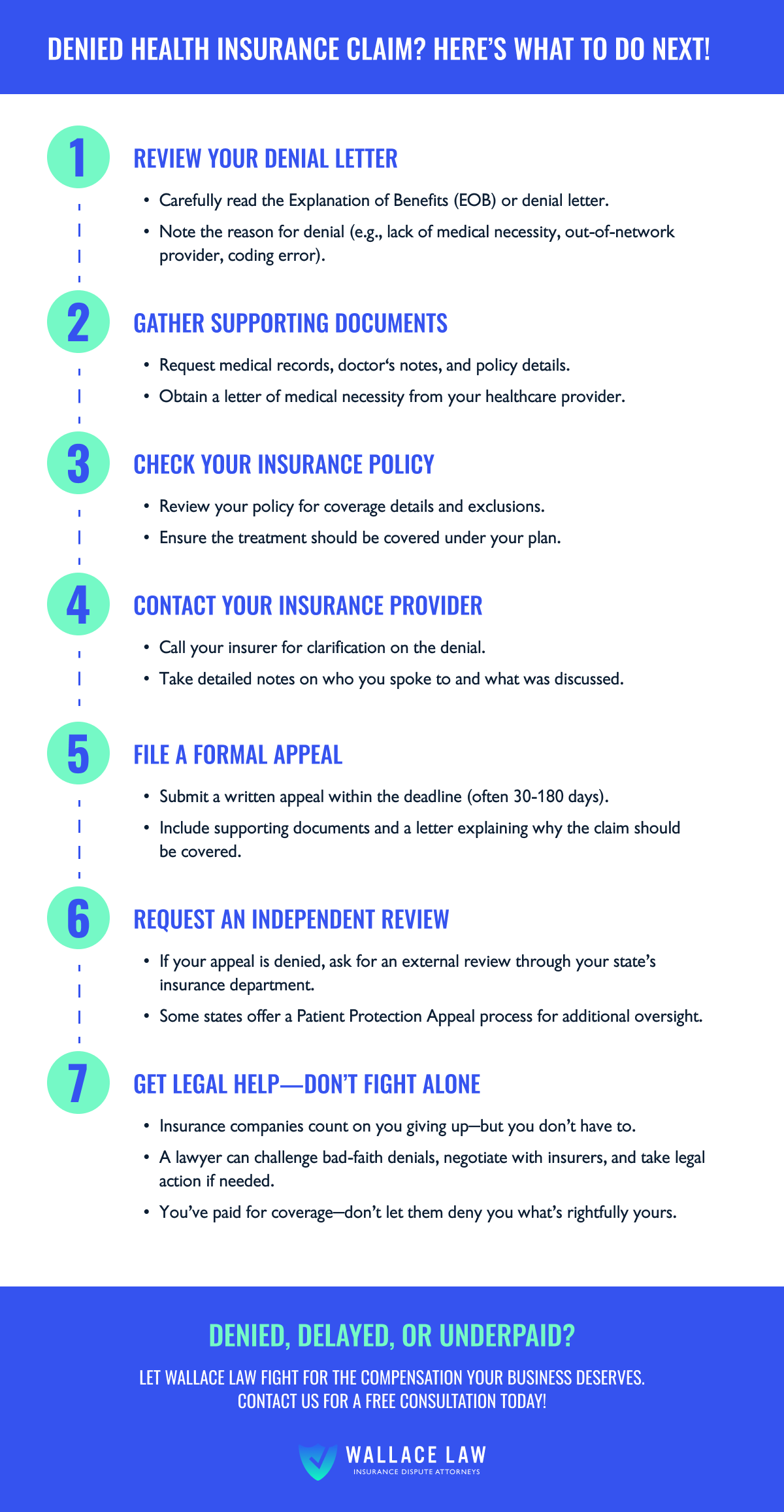
Start by reading the denial letter carefully. Check the reason for denial and compare it with your policy. If it’s unclear or you think it’s unfair, gather your documents and consider contacting a lawyer.
Can I Appeal A Denied Claim Without A Lawyer?
Yes, you can file an appeal on your own. However, for complex or high-value claims, or if you’ve already appealed and lost, a lawyer’s help increases your chances of success.
How Long Does The Appeal Process Take?
It depends on your insurer and state laws. Some appeals are resolved in a few weeks, while others may take months. Urgent cases (like life-threatening treatments) often get faster decisions.
Does Hiring A Lawyer Guarantee My Claim Will Be Paid?
No lawyer can guarantee a win. However, lawyers understand the law and insurance rules, which improves your chances. They can also help you avoid common mistakes that lead to denial.
What If I Can’t Afford A Lawyer?
Many denied health insurance claim lawyers offer free consultations and work on a contingency basis. This means you pay nothing unless you recover money. Always ask about fees before hiring anyone.
—
Facing a denied health insurance claim is stressful, but you don’t have to do it alone. A qualified lawyer can guide you, fight for your rights, and improve your odds of getting the coverage you paid for. By understanding the process and your options, you can make informed decisions and protect your health and finances.
Read More:
- Affordable Health Insurance Quotes: Save More on Quality Coverage
- Compare Family Health Insurance Plans: Find the Best Coverage
- Private Medical Insurance UK: Your Guide to Better Health Cover
- Best Private Health Insurance Plans: Top Choices for 2024
- Short Term Health Insurance Online: Compare Top Plans Instantly
- Medicare Supplement Plans Comparison: Find the Best Coverage Now
- Medicare Dental and Vision Coverage: What You Need to Know
- Medicare Prescription Drug Plans: Save Big on Your Medications